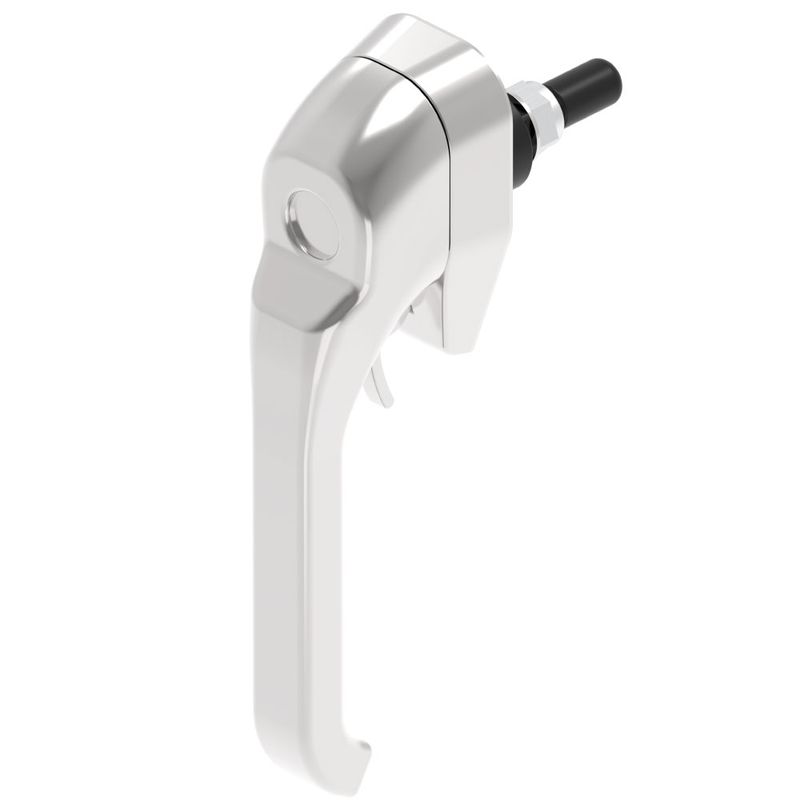
How to Choose the Right Quarter Turn Lock Supplier by Verifying Quality Certifications?
Finding a reliable hardware partner for industrial manufacturing goes far beyond comparing basic pricing sheets or glancing at a product catalog. Industrial engineers and procurement officers are constantly tasked with sourcing components that must perform flawlessly in unforgiving environments, where a single point of failure can compromise an entire control cabinet or machinery enclosure. As ForndLock, a direct manufacturer with extensive experience in engineering and producing high-performance access hardware, we understand the heavy responsibility that rests on your shoulders.
We see many OEM clients who come to us after experiencing catastrophic hardware failures caused by unverified suppliers making false claims about their product capabilities. This comprehensive guide will explore exactly How to Choose the Right Quarter Turn Lock Supplier for your specific engineering needs. We will take a deep dive into the most critical yet frequently misunderstood step of the procurement process: how to verify quarter turn lock supplier quality certifications, ensuring your supply chain remains secure, compliant, and technically sound.
Why Are Genuine Quality Certifications Crucial?
Genuine quality certifications prove that a supplier's hardware can withstand harsh industrial environments without catastrophic failure, separating reliable manufacturers from mere assemblers.
When you source hardware for industrial applications, you are not just buying a piece of metal; you are investing in the security and longevity of your end-product. A quarter turn lock supplier might offer components that look identical to high-end hardware on the surface, but the internal engineering, material composition, and tolerance controls can vary wildly. Certifications act as the definitive proof that a product has been subjected to rigorous, standardized testing. Without these documents, procurement officers are essentially gambling with their company's reputation. At ForndLock, we have encountered numerous cases where clients previously relied on uncertified hardware, only to face massive recall costs when latches corroded in marine environments or snapped under heavy vibration. Genuine certifications eliminate this guesswork by providing a transparent, scientifically backed guarantee of performance. They serve as a vital baseline, ensuring that the manufacturer has invested in proper tooling, premium raw materials, and strict quality control protocols rather than cutting corners to offer the lowest possible price.
How Do IP Ratings Prevent Failures?
Authentic IP65 or IP67 ratings guarantee that the latch mechanism blocks dust ingress and high-pressure water jets, preventing internal cabinet damage.
Ingress Protection ratings are not just marketing terms; they are strict mechanical standards that dictate how well an enclosure's hardware can seal out destructive elements. For engineers designing outdoor telecommunications cabinets, railway control panels, or food processing equipment subjected to daily washdowns, the integrity of the quarter turn lock is paramount. A genuine IP65 rating means the lock is completely protected against dust and can withstand low-pressure water jets from any direction. An IP67 rating goes a step further, ensuring the lock can survive temporary submersion in water. Achieving these ratings requires precise engineering of internal O-rings, compression gaskets, and tight housing tolerances. If a supplier falsely claims an IP rating, the lock will inevitably allow moisture or conductive dust to bypass the door seal, leading to electrical shorts, corrosion of sensitive internal components, and complete system failure. Therefore, verifying these ratings is a non-negotiable step in protecting your expensive internal equipment.
Why Does RoHS Compliance Matter Today?
Strict RoHS compliance ensures your hardware is free from hazardous substances, keeping your end-products legally viable for global export.
The Restriction of Hazardous Substances directive is a critical environmental and legal standard that impacts any OEM client looking to sell machinery or electrical cabinets across international borders. This compliance ensures that components do not contain dangerous levels of lead, cadmium, mercury, or specific flame retardants. For procurement officers, sourcing from a quarter turn lock supplier that ignores RoHS standards presents a massive legal liability. If your final assembled product is stopped at customs and tested, the presence of non-compliant hardware can result in entire shipments being rejected, heavy fines, and a permanent mark against your brand's export record. Furthermore, modern industrial clients are increasingly demanding environmentally responsible manufacturing practices. Partnering with a manufacturer that strictly adheres to RoHS guidelines demonstrates your commitment to sustainable engineering and protects your supply chain from sudden regulatory disruptions in key global markets.
How Do You Verify Quality Certifications?
You must cross-reference the provided certificates with the issuing third-party laboratory's database and request detailed factory audit reports.
The unfortunate reality of global procurement is that digital documents are easily manipulated, and surface-level claims are often exaggerated. Learning exactly how to verify quarter turn lock supplier quality certifications is the single most effective way to separate genuine manufacturers from unreliable sources. At ForndLock, we actively encourage our clients to scrutinize our documentation. When we provide an SGS test report for our heavy-duty latches, we guide engineers and buyers to visit the official SGS verification portal, input the unique report number, and confirm that the document matches the laboratory's secure database. This level of transparency is essential because a photoshopped PDF can easily hide the fact that a product failed its salt spray test or ingress protection evaluation. Furthermore, verifying certifications involves looking beyond the product itself and examining the facility where it is made. A reliable manufacturer will have no hesitation in sharing comprehensive data, whereas unverified suppliers will often make excuses, claim the documents are confidential, or provide blurry, outdated certificates that belong to entirely different product lines.
What Documentation Proves True IP Ratings?
Legitimate suppliers will provide comprehensive test reports from accredited labs, detailing the exact testing conditions rather than just a basic summary certificate.
When evaluating a potential hardware partner, a single-page certificate stating "IP65 Approved" is never enough. You must request the full testing appendix. A genuine laboratory report will span multiple pages and include high-resolution photographs of the specific lock model attached to the testing apparatus. It will detail the water pressure used, the duration of the exposure, the temperature of the testing environment, and the visual inspection results after the test was concluded. By reviewing these detailed parameters, engineers can ensure that the hardware was tested under conditions that accurately reflect their real-world applications. If a supplier can only produce a generic cover letter or refuses to share the full testing methodology, it is a strong indicator that the product has not actually undergone rigorous independent evaluation.
How Do Third-Party Audits Work?
Independent agencies physically inspect the manufacturing facility to confirm that their quality control processes match the standards claimed on paper.

Product testing is only half of the equation; consistent manufacturing quality is the other. Third-party audits, such as those required for ISO 9001 certification, involve external inspectors visiting the factory floor to evaluate every step of the production cycle. They verify how raw materials are inspected upon arrival, how die-casting machines are calibrated, and how defective units are isolated and recorded. Direct manufacturers like ForndLock welcome these audits because they validate our internal quality management systems and continuous improvement efforts. In contrast, trading companies or unauthorized resellers often avoid third-party audits because they do not own the production equipment and cannot control the manufacturing environment. Requesting a recent, verified factory audit report is a powerful technique for procurement officers to confirm they are dealing directly with a capable, well-organized manufacturing facility.
How Do Minimum Order Quantities Work?
Minimum order quantities dictate the smallest batch a factory will produce, directly impacting your inventory costs and project scaling phases.
Navigating the financial and logistical aspects of hardware procurement requires a deep understanding of why production thresholds exist. Every time you engage a manufacturer for a production run, there are fixed costs associated with setting up die-casting molds, calibrating CNC machinery, and purchasing raw materials in bulk. Understanding quarter turn lock supplier minimum order quantity requirements is essential for aligning your project timeline with your available budget. For standard, off-the-shelf locks, these thresholds might be relatively low because the manufacturer is already producing them continuously. However, for custom-engineered latches requiring specific finishes, modified cam lengths, or unique security keyways, the factory must halt other operations to set up your specific tooling. The minimum order quantity ensures that the setup costs are amortized across a sufficient number of units, making the production run economically viable for the factory while keeping the per-unit cost reasonable for the buyer.
How Do MOQs Impact Your Procurement?
High MOQ thresholds can tie up your capital in excess inventory, while excessively low MOQs might indicate a reseller rather than a direct manufacturer.
Procurement officers must constantly balance the need for cost-effective purchasing against the risks of overstocking. If quarter turn lock supplier minimum order quantity requirements are too rigid, you may be forced to purchase thousands of units for a project that only requires a few hundred, locking up vital cash flow in warehouse inventory. Conversely, if a company offers to sell you custom-engineered locks with zero minimum order requirements, you should proceed with caution. This often indicates that the company is a reseller liquidating existing stock rather than a direct manufacturer capable of long-term, consistent production. Engineers and buyers must evaluate these thresholds carefully, ensuring the supplier has the actual manufacturing capacity to scale up as the project grows, without demanding unreasonable upfront commitments during the initial design phases.
Can You Negotiate Flexible MOQ Terms?
Direct manufacturers often offer tiered MOQ structures to support your prototyping phase before scaling up to mass production.
Flexibility is a hallmark of a true manufacturing partner. At ForndLock, we understand that industrial projects do not jump straight from the drawing board to mass production. Engineers require physical samples for fitment testing, followed by pilot runs to evaluate performance in the field. We structure our quarter turn lock supplier minimum order quantity requirements to accommodate this reality. By offering tiered production plans, we allow OEM clients to order smaller batches during the prototyping and testing phases. Once the design is validated and the client is ready for full-scale production, we adjust the volume and pricing structure accordingly. This collaborative approach to minimum order quantities reduces financial risk for the buyer while establishing a stable, long-term manufacturing timeline that guarantees consistent component availability.
How Does ForndLock Solve Real Problems?
By combining transparent certification verification with flexible manufacturing, we resolve critical supply chain bottlenecks for global industrial clients.
The true value of a reliable hardware partner is best demonstrated through real-world application. Recently, a European railway equipment OEM approached ForndLock facing a severe crisis with their outdoor trackside control panels. Their previous supplier had provided them with components backed by fake IP67 certificates. During the seasonal heavy rains, the quarter turn locks failed to compress the door gaskets adequately, and water bypassed the latch housings. This led to severe water ingress, causing electrical shorts in critical signaling equipment. To make matters worse, when the client demanded a redesigned lock, the previous supplier imposed rigid, massive minimum order quantities that the client could not justify for a mere testing phase.
The OEM client needed a partner who could guarantee environmental sealing and accommodate a phased rollout. Our engineering team immediately stepped in, providing our heavy-duty, vibration-resistant quarter turn locks. More importantly, we supplied the full, verifiable SGS test reports detailing the exact IP67 submersion tests our locks had passed. We walked their procurement officers through the process of verifying these documents directly through the laboratory's database, instantly rebuilding their confidence in the supply chain. Recognizing their urgent need to test the solution before committing to a massive fleet upgrade, we established a highly flexible pilot-run production plan that perfectly aligned with their testing schedule.
The results were definitive. During the subsequent field testing phase across their trackside infrastructure, the control panels experienced zero water ingress issues. The internal electronics remained completely dry, and the client was able to optimize their cash flow by scaling up their orders only after the hardware had proven itself in the real world. This case illustrates exactly why verifying documentation and partnering with an adaptable manufacturer is critical for industrial success.
How to Share Your Project Needs?
You can initiate your custom hardware project by sending your exact specifications and certification requirements directly to our engineering team.
Securing the right industrial hardware requires moving past generic claims and demanding verifiable proof of quality. Whether you are designing sensitive telecommunications enclosures, rugged railway equipment, or heavy machinery, the integrity of your access hardware will dictate the reliability of your final product. By understanding how to validate testing laboratory reports, evaluating factory audit transparency, and negotiating sensible production thresholds, you can protect your supply chain from costly failures. At ForndLock, we are ready to bring our manufacturing expertise to your next engineering challenge. We invite engineers, procurement officers, and OEM clients to discuss their specific environmental challenges and technical parameters with us. To receive verifiable documentation, request physical samples for fitment testing, or submit your technical drawings for a detailed manufacturing evaluation, please send your project requirements directly to [email protected].