
How Does a Friction Hinge Maintain Position Without Locking: An Industrial Engineering Guide
Designing heavy access panels, industrial displays, or protective enclosures comes with a consistent mechanical engineering challenge: keeping a lid or door safely open at any desired angle without needing a secondary support system. Traditional solutions like gas struts, prop rods, or mechanical latches often eat up valuable interior space, make assembly more complicated, and create extra points where things can go wrong. Engineers need motion control components that provide reliable positioning at any angle, even under shifting loads, repeated use, or tough environmental conditions. This guide breaks down the mechanical principles behind constant resistance technologies and gives engineers a clear, practical framework for calculating and choosing the exact hardware their project requires, helping ensure both safety and efficiency in demanding industrial settings.
As an experienced industrial locks, industrial latches, industrial hinges, industrial handles, and access hardware manufacturer, ForndLock regularly helps engineers move past basic questions like What is a Friction hinge? to tackle complex motion control challenges. We understand that advanced enclosure design involves much more than simple pivoting mechanisms. It demands careful attention to vibration resistance, environmental sealing, material wear, and precise load distribution. By drawing on our deep manufacturing knowledge and extensive testing capabilities, we help purchasing professionals and OEM clients cut out the guesswork, simplify their production processes, and choose hardware that performs reliably throughout the full lifespan of their equipment.
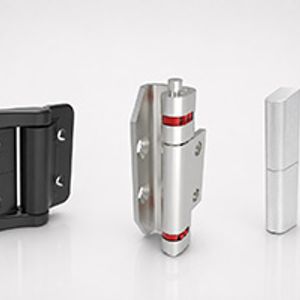
Mechanics of Position Control Without Locks
To truly understand how does a friction hinge maintain position without locking, we need to look at the internal physics of interference fits and pre-loaded friction elements. Unlike standard free-swinging hinges, which are built to minimize resistance for easy movement, these specialized components are deliberately designed to generate precise, continuous rotational drag. At the heart of the mechanism is a hardened central shaft tightly wrapped by spring steel bands, friction clips, or compression rings. These internal elements are manufactured to dimensions that are microscopically smaller than the shaft itself, creating a deliberate mechanical interference fit. When pressed together during factory assembly, the compressed internal parts generate enormous, uniform radial pressure against the central shaft.
This constant radial pressure creates static friction, also known in engineering physics as stiction. Stiction is the fundamental force that resists the initial movement of two surfaces that are in direct contact with each other. When an operator opens a heavy access panel and lets go, the static friction generated by the internal bands immediately pushes back against the gravitational pull acting on the panel's weight. Because the static friction coefficient is carefully calibrated during manufacturing to be higher than the rotational force the panel's weight creates, the hinge holds the lid perfectly steady at that exact angle. There are no gears, detents, or locking pins involved in this process. The system relies entirely on constant microscopic mechanical resistance.
Engineers and purchasing professionals often ask, What is a Torque Hinge? In industrial hardware terminology, a torque hinge is simply an alternative industry term for this exact friction-based mechanism. Both terms describe a device that uses constant rotational resistance to provide infinite positioning capability across a full range of motion. The true engineering value of this mechanism lies in the smooth transition between static friction and dynamic friction. When an operator applies deliberate manual force to move the panel, that applied force overcomes the stiction barrier, shifting the internal mechanism into dynamic friction. This allows for exceptionally smooth, controlled movement without any binding. Once the operator stops pushing or pulling, the system instantly returns to static friction, holding the panel securely in place through physics rather than through any mechanical locking device.
Going beyond basic definitions, the critical difference between a standard friction mechanism and a precision-engineered component is the torque decay curve. Over tens of thousands of cycles, lower-quality hinges experience significant torque degradation due to material wear, microscopic galling, and metal fatigue. We engineer our internal components using specialized synthetic damping grease and hardened steel alloys. This proprietary combination prevents metal-on-metal micro-welding, ensures uniform wear across the friction bands, and maintains a nearly flat torque decay curve. The holding force stays consistent year after year, guaranteeing that a heavy industrial lid will not suddenly drift downward after thousands of operational cycles. This is a vital safety factor for OEM clients designing critical infrastructure.
Generating Friction Torque in Industrial Hinges
The theoretical physics of rotational resistance must hold up against the harsh realities of industrial environments. Environmental and material factors have a fundamental impact on the hardware's ability to maintain its holding power over time. Material selection determines not only the structural strength of the external component but also the internal friction dynamics. For example, marine-grade stainless steel offers excellent corrosion resistance but has different thermal expansion rates and friction coefficients compared to standard zinc alloys or engineered polymers. When we manufacture these components, we must precisely match the housing material, the shaft alloy, and the internal friction bands to ensure they expand and contract at the same rate across extreme temperature swings, preventing any sudden loss of holding torque during severe weather changes.
Industrial environments regularly expose exterior equipment to tough conditions, including heavy moisture, chemical exposure, and fine particulate contamination. If dust, grit, or water gets inside the internal friction mechanism, it acts as an unintended abrasive or lubricant, dramatically changing the carefully calibrated resistance. We engineer our access hardware with rigorous waterproof and dustproof sealing methods, using integrated O-rings and specialized thermoplastic enclosures to completely isolate the friction engine from the outside environment. This careful sealing ensures that the internal damping grease stays uncontaminated and the static friction coefficient remains perfectly stable, regardless of weather conditions, high-pressure washdown procedures, or dusty manufacturing facilities.
Vibration is one of the most complex and persistent challenges in industrial motion control. High-frequency vibration from heavy machinery, diesel generators, or transportation can effectively break the static friction barrier. When continuous vibration micro-cycles the internal shaft, it temporarily reduces stiction, causing a heavy access panel to slowly drift downward over time. Drawing on our extensive first-hand manufacturing experience, we counteract this problem by engineering higher torque margins and using proprietary friction band geometries that absorb and dissipate vibrational energy rather than transferring it directly to the rotational axis. This keeps the panel firmly in place even on active heavy machinery.
Additionally, the manufacturing process used to set the torque is critical for long-term reliability. We permanently set the pre-load at the factory using automated hydraulic presses and highly sensitive precision torque measurement equipment. This tightly controlled manufacturing environment ensures that the interference fit is perfectly calibrated to the specified resistance level before the product ever leaves our facility. By permanently setting the torque during the manufacturing stage, we eliminate the need for end-user adjustments in the field. This prevents maintenance personnel from accidentally over-tightening or under-tightening the mechanism, ensuring consistent, maintenance-free performance throughout the entire lifecycle of the industrial enclosure.
Selecting Torque Based on Panel Weight
Moving from theoretical mechanics to practical application requires a clear and precise methodology. Engineers and purchasing professionals must calculate their exact hardware needs to ensure optimal performance and safety. Using a reliable friction hinge torque rating selection guide for panel weight is the most important step in the mechanical design phase. The core engineering formula for calculating the required torque is straightforward but requires accurate measurements: multiply the panel weight by the distance from the pivot point to the center of gravity.
First, determine the exact total weight of the access panel or door, making sure to include all attached components such as internal display screens, heavy insulation, or internal wiring. Second, locate the precise center of gravity of the fully assembled panel. For a standard, uniform rectangular door, the center of gravity is generally located right in the geometric middle. Third, measure the horizontal distance from the hinge pivot axis to this center of gravity when the panel is in its most horizontal position. This horizontal position represents the point of maximum gravitational leverage. Multiplying the total weight by this horizontal distance gives you the base torque requirement needed to hold the panel stationary.
However, specifying hardware based only on this base calculation often leads to field failures and a poor user experience. It is absolutely essential to add a safety margin, typically fifteen to twenty percent, to the calculated base torque. This critical safety margin accounts for dynamic environmental loads, sudden forceful movements by operators, wind resistance on outdoor enclosures, and the slight natural torque decay that occurs over tens of thousands of operational cycles. Once the total required torque including the safety margin is established, you must distribute this load logically across the intended number of hinges. For a standard dual-hinge setup, divide the total required torque by two. Distributing the rotational resistance evenly prevents panel warping, ensures smooth synchronized operation, and prevents premature wear at a single failure point.
From a manufacturing and troubleshooting perspective, we frequently encounter OEM projects where engineers have either over-specified or under-specified the torque ratings. When the torque is over-specified, the panel becomes excessively difficult to open, causing rapid operator fatigue and potentially flexing or damaging the enclosure frame over time. On the other hand, under-specifying the torque results in dangerous downward drift, putting technicians at risk. To address this common problem, we manufacture specialized asymmetric torque hinges. These advanced components provide different levels of resistance depending on the direction of rotation. For heavy upward-opening panels, an asymmetric hinge can provide low resistance during the lifting phase, making it easy for the operator to open, while delivering high resistance during the closing phase to firmly hold the heavy lid against gravity. This nuanced approach to load management shows the real value of precise hardware selection based on accurate weight calculations.
Real Manufacturing Case Study and Solutions
Theoretical calculations and mechanical principles are best confirmed through real-world industrial applications. Our OEM and ODM custom manufacturing capabilities are regularly put to work solving complex field failures where standard off-the-shelf components fall dangerously short of performance requirements.
The Challenge
A North American manufacturer of ruggedized outdoor telecom enclosures came to us with a critical safety and operational problem. Their heavy maintenance panels, which housed sensitive routing equipment, were drifting shut during high-wind conditions and constant environmental vibration from nearby highway traffic. Standard positioning components were failing quickly due to severe coastal corrosion and significant torque loss caused by constant micro-vibrations. The unpredictable downward drift posed a serious physical safety risk to field technicians performing delicate maintenance tasks, and the frequent replacement of rusted hardware was driving up warranty costs considerably.
Our Engineering Solution
We worked directly with their engineering team to thoroughly analyze the mechanical failure points. Using our comprehensive selection matrix, we recalculated the exact torque required, carefully factoring in the maximum anticipated wind load and the specific center of gravity of their newly upgraded, heavier panels. We supplied rapid testing samples and ultimately developed a custom stainless steel friction hinge. This custom component featured an enhanced interference fit designed specifically to resist continuous high-frequency vibration. We also integrated advanced weather-resistant internal seals to protect the damping grease from the highly corrosive coastal salt air and heavy moisture ingress.
The Result
The newly engineered hardware maintained the panel position perfectly at any angle without locking mechanisms, even under simulated severe storm conditions. The custom stainless steel construction successfully passed rigorous prolonged salt-spray testing, ensuring strong long-term environmental durability. By permanently setting the precise asymmetrical torque at our factory, we eliminated the need for complex field adjustments and significantly streamlined their final assembly process. This direct engineering intervention completely resolved the safety hazard, greatly improved the technician experience, and resulted in a successful, long-term bulk delivery contract for the entire telecom enclosure product line.
Partnering for Custom Access Hardware Needs
Understanding the internal mechanics of constant torque and accurately calculating precise load requirements are the fundamental keys to successful industrial enclosure design. When engineers move beyond basic hardware and use precision-engineered motion control components, they significantly improve both the safety and the operational lifespan of their equipment. Selecting the right component requires balancing theoretical physics with harsh environmental realities, material science, and rigorous manufacturing standards.
As a dedicated industrial hardware manufacturer, ForndLock offers comprehensive capabilities to support your most demanding and complex engineering projects. From rigorous OEM and ODM customization to rapid sample testing and dedicated engineering support, we ensure that every component meets strict performance criteria before bulk delivery. We maintain tight control over the entire manufacturing process, guaranteeing that our products deliver consistent, reliable holding power cycle after cycle, regardless of the application environment.
We invite engineers, purchasing professionals, and OEM clients to share their specific project requirements with our technical team. Whether you need expert help calculating complex load distributions, require custom torque specifications for a unique application, or want to explore our advanced weather-sealed hardware designs, we are ready to help. Send your detailed CAD drawings, request rigorous sample testing, or discuss your custom manufacturing and bulk delivery needs by emailing us directly at: [email protected].