
How Does A Cam Lock Work In Electrical Connectors For Industrial Applications?
This article is designed to help industrial engineers, procurement teams, and OEM customers resolve critical uncertainties regarding heavy-duty connector selection. When you are tasked with designing power distribution systems or specifying components for harsh operational environments, understanding the exact mechanical principles behind your hardware is absolutely non-negotiable. A failing connection in a high-voltage industrial setup does not just cause temporary downtime; it can lead to catastrophic equipment damage, severe safety hazards, and massive financial losses. We will break down exactly how these mechanisms function at a structural level, evaluate safety comparisons to help you make informed selection decisions, and explore real-world parameters like vibration resistance, environmental sealing, and material specification. By examining the precise internal mechanics of these fastening systems, you will gain the necessary technical criteria to specify the most reliable components for your industrial projects. As a dedicated manufacturer, ForndLock brings extensive engineering experience to this discussion, moving beyond theoretical concepts to provide actionable insights based on rigorous testing and real-world application data.
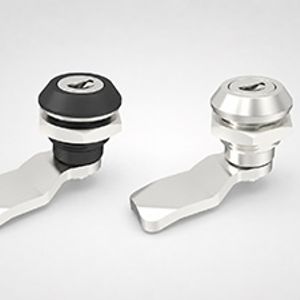
What Is A Cam Lock?
A cam lock is a specialized mechanical fastener that uses a rotating cam to secure two components tightly together, widely utilized to maintain reliable connections in industrial systems.
To fully answer the question of What is a Cam Lock, we must look beyond standard residential or lightweight commercial applications. In industrial environments, these are not simple cabinet latches used to keep a door shut. They are precision-engineered devices designed to handle high mechanical stress, extreme temperatures, and continuous operational wear. The fundamental principle relies on converting rotary motion into linear clamping force. When the mechanism is actuated, the internal geometry shifts, pulling the mating surfaces together with immense pressure. At ForndLock, we manufacture these mechanisms using heavy-duty materials such as marine-grade stainless steel, specialized anti-corrosion alloys, and reinforced industrial polymers. This focus on material science ensures that the physical connection remains stable even when exposed to corrosive chemicals, high humidity, or heavy mechanical impacts. Understanding this baseline definition is crucial for procurement teams who need to differentiate between standard commercial fasteners and true industrial-grade locking solutions.
What Are The Core Components?
The primary components include a cylindrical housing, a rotating plug, and a metallic cam that physically engages the receptacle to prevent accidental disconnection.
The architecture of this mechanism is deceptively simple but requires extreme manufacturing precision. The cylindrical housing acts as the protective outer shell, shielding the internal moving parts from environmental debris and mechanical impact. Inside this housing sits the plug, which is the rotating cylinder that the operator interfaces with. Attached to the end of this plug is the cam itself, a specially shaped metallic arm or disc. The geometric design of the plug and cam work in tandem; as the plug rotates, the offset shape of the cam sweeps into a corresponding slot or behind a strike plate on the mating connector half. To ensure longevity in harsh environments, ForndLock utilizes specific industrial-grade materials. For instance, the cam itself is often machined from hardened steel or specialized brass alloys boasting high tensile strength, ensuring it will not bend or shear under heavy load. The housing is typically cast or machined from corrosion-resistant metals, providing a rigid foundation that maintains the alignment of the internal components over thousands of mating cycles.
Why Are They Used Here?
They are deployed in industrial scenarios because their mechanical advantage provides exceptional clamping force, ensuring stability even under severe operational stress.
The transition from general mechanical fastening to specialized electrical applications is driven by the absolute necessity for a robust physical connection before electrical transmission can safely occur. In an industrial power distribution network, the electrical contacts must be held together with consistent, high pressure to minimize electrical resistance. If a connection is loose, the resulting microscopic gaps will cause electrical arcing, rapid heat generation, and eventually a complete meltdown of the connector housing. The mechanical advantage of the sweeping cam action pulls the two halves of the connector together with a force that cannot be easily replicated by simple push-pull designs. This clamping force compresses the electrical contacts tightly against one another, creating a highly efficient conductive pathway. We engineer these fastening systems specifically for environments where heavy machinery, continuous movement, and unpredictable physical stresses would easily tear a standard connector apart.
How Do Electrical Cam Mechanisms Operate?
In electrical connectors, a cam lock works by utilizing a rotating latch that physically compresses the mating halves together, ensuring uninterrupted power transmission even under severe vibration.
To deeply understand how does a cam lock work in electrical connectors, one must examine the step-by-step physical interaction between the mating halves during the connection process. The operation begins with the linear insertion of the male plug into the female receptacle. At this stage, the electrical pins or sleeves make initial contact, but the connection is not yet secure or fully conductive for high-current loads. The critical phase occurs during rotation. As the operator turns the locking mechanism, the cam engages with a helical ramp or locking groove inside the receptacle. This rotation forces the two halves of the connector to draw closer together, compressing them linearly. This physical compression is the secret to their performance. It forces the conductive surfaces to mate with maximum surface area contact, which drastically lowers electrical resistance and prevents arcing. Furthermore, industrial power transmission generates significant heat. The heavy-duty compression provided by the locking mechanism accommodates the microscopic thermal expansion and contraction of the metal contacts without allowing the connection to loosen.
How Is Vibration Resistance Achieved?
Vibration resistance is achieved through the cam's tight interference fit and engineered friction, which prevents the connector from vibrating loose during heavy machinery operation.
Continuous mechanical shock is one of the most significant pain points for OEM customers designing equipment for mining, manufacturing, or heavy transportation. When machinery operates, it generates high-frequency vibrations that travel through cables and directly into the connection points. Standard fasteners will naturally back out or vibrate loose under these conditions. We counteract this physics problem through precision engineering. The locking groove is designed with a slight taper or a detent that creates a tight interference fit at the very end of the cam's rotational travel. Once the cam passes into this locked position, the engineered friction between the metal surfaces requires a massive amount of reverse rotational force to disengage. As a manufacturer, ForndLock validates this vibration resistance through rigorous sample testing, subjecting our designs to advanced sine sweep testing and random vibration profiles to guarantee that the electrical continuity remains unbroken even in the most violent operational environments.
Why Is Environmental Sealing Important?
Environmental sealing prevents moisture, dust, and corrosive elements from compromising the electrical contacts, maintaining system integrity in harsh operational conditions.
In industrial applications, a secure physical connection is only half of the equation; protecting that connection from the surrounding environment is equally critical. The mechanical compression generated by the cam lock does more than just push electrical contacts together; it also actively compresses internal environmental gaskets and O-rings. When the cam engages and pulls the connector halves tightly against each other, a perimeter seal made of industrial-grade silicone or EPDM rubber is crushed slightly, filling any microscopic gaps between the housings. This action creates an impenetrable barrier against external elements. We design our connectors to meet stringent waterproof and dustproof IP ratings, such as IP67 and IP68, which are crucial metrics for industrial procurement decisions. Without this level of sealing, conductive dust could bypass the housing and cause a short circuit, or moisture could initiate galvanic corrosion on the copper contacts, leading to increased resistance and eventual thermal failure.
Which Connector Design Is Actually Safer?
When evaluating cam lock vs twist lock connector which is safer, cam locks generally offer superior security because their mechanical compression design is significantly less prone to accidental disengagement under extreme stress.
Engineers and procurement teams frequently debate the merits of different fastening methodologies when specifying components for critical infrastructure. Safety is the ultimate deciding factor, particularly in high-voltage or high-amperage industrial setups where an accidental disconnection under load can lead to catastrophic equipment failure, severe electrical arcs, or life-threatening safety hazards for nearby personnel. When analyzing cam lock vs twist lock connector which is safer, the fundamental difference lies in how the locking force is applied and maintained. Our engineered mechanisms provide distinct tactile feedback and visual confirmation of locking. An installation engineer can physically feel the cam snap into its final detent, and visual alignment markers clearly indicate that the system is fully secured. This eliminates the dangerous ambiguity of a partially connected cable, ensuring that power is only transmitted when the mechanical housing is fully capable of containing the electrical load.

How Do Twist Locks Perform?
Twist locks rely on a simple rotational friction fit that can gradually loosen when subjected to continuous industrial vibration or mechanical shock.
To objectively analyze the limitations of alternative designs, we must look at the physics of how they maintain their hold. A standard twist mechanism typically features curved blades that slide into corresponding slots and are secured by a slight rotational twist. While this is sufficient for temporary commercial power distribution, it presents significant vulnerabilities in heavy-duty applications. The primary issue is that they rely almost entirely on a friction fit without a dedicated mechanical latching point. Over time, as the equipment undergoes thermal cycling heating up during operation and cooling down when powered off the metal components expand and contract. This thermal movement, combined with continuous industrial vibration, causes the friction fit to gradually lose its grip. Without a positive mechanical interlock, the connector can slowly rotate backwards, leading to a loose connection, increased electrical resistance, and a high probability of thermal failure.
Quarter Turn Cam Lock with Key
Why Choose Cam Lock Security?
Choosing cam lock security guarantees a positive mechanical interlock that requires deliberate rotational force to disengage, protecting critical electrical circuits from sudden power loss.
The safety advantages of our engineered solutions become immediately apparent when analyzing long-term reliability metrics. If you are still wondering about cam lock vs twist lock connector which is safer, consider the physical pull-out force required to break the connection. A positively engaged cam mechanism can withstand hundreds of pounds of linear pulling force without yielding, whereas friction-based alternatives will simply slide out once the rotational friction is overcome. This positive mechanical interlock means that a heavy cable being accidentally snagged by moving machinery will not result in a live, flailing high-voltage wire. The connection remains solid until an operator applies deliberate, localized rotational force to the locking ring. By choosing this level of security, OEM customers drastically reduce their liability and ensure that their equipment complies with the strictest industrial safety standards regarding accidental power disconnections.
How Do We Solve Client Problems?
We solve complex industrial challenges by engineering custom cam lock solutions that eliminate accidental power disconnections and dramatically improve equipment reliability in the field.
As an experienced manufacturer, ForndLock does not just supply off-the-shelf components; we partner with our clients to resolve their most difficult engineering bottlenecks. We understand that every industrial environment presents unique challenges that standard catalog items often cannot address. Our manufacturing capabilities extend to full OEM and ODM customization, allowing us to modify housing geometries, upgrade material specifications, and adjust locking tolerances to suit specific operational profiles. We back this up with comprehensive engineering support, providing detailed CAD drawings, rapid prototyping, and bulk delivery systems scaled to meet the demands of global manufacturing supply chains. By analyzing real-world failures, we continuously refine our designs to deliver products that perform flawlessly where others fail.
What Was The Client Challenge?
A European mining equipment manufacturer faced frequent electrical failures because their standard connectors could not withstand the continuous high-impact vibrations of excavation machinery.
To illustrate our problem-solving capabilities, consider a recent project involving a prominent OEM client in the European mining sector. This manufacturer was outfitting heavy excavation machinery with high-amperage power distribution hubs. The operational environment was brutal, characterized by constant exposure to abrasive rock dust, heavy moisture from subterranean water sprays, and relentless, high-impact mechanical shock from the drilling apparatus. The client reported severe symptoms: their standard heavy-duty connectors were experiencing dust ingress that fouled the contacts, and the vibration-induced loosening was causing frequent electrical arcing. This led to melted housings, dangerous short circuits, and incredibly costly downtime for the mining operators, who were losing thousands of dollars for every hour the machinery sat idle waiting for electrical repairs.
How Did ForndLock Fix It?
ForndLock engineered a heavy-duty cam lock connector with enhanced IP68 sealing and a customized vibration-resistant latch, completely eliminating power interruptions in their fleet.
Our engineering team immediately initiated a thorough review of the client's technical drawings and operational parameters. We determined that a standard friction-based fastener was entirely inadequate for this level of mechanical shock. We engineered a customized solution utilizing a reinforced stainless steel cam mechanism featuring a deeper locking detent to guarantee absolute vibration resistance. To address the environmental hazards, we upgraded the internal compression gaskets to specialized EPDM rubber, achieving a verified IP68 rating that completely blocked abrasive mining dust and high-pressure water. After providing initial sample testing to validate the vibration profiles and anti-corrosion properties, we seamlessly transitioned to bulk delivery. The implementation of this tailored solution resulted in a massive increase in equipment uptime, entirely eliminating the vibration-induced power interruptions that had previously plagued the client's machinery.
How Do You Select Right Connectors?
You select the right connectors by evaluating your specific industrial environment, determining necessary IP ratings, and partnering with an experienced manufacturer for precision engineering and rigorous testing.
Making the correct procurement decision requires a holistic evaluation of your project's technical demands. You must first analyze the mechanism type required to handle your specific mechanical loads, keeping in mind the safety requirements and pull-out force tolerances discussed earlier. Next, carefully assess the environmental conditions to specify the correct waterproof and dustproof IP ratings, ensuring that the mechanical compression of your chosen fastener will adequately seal the internal contacts. Finally, you must evaluate the vibration resistance needed to maintain continuous electrical transmission without the risk of thermal failure. Navigating these variables can be complex, which is why working directly with a manufacturer capable of providing comprehensive project support is the most effective strategy for ensuring long-term reliability.
As an experienced manufacturer, ForndLock is ready to support your next industrial project with proven engineering expertise and reliable manufacturing capacity. Whether your operations require standard heavy-duty components, specialized OEM/ODM customization, or rigorous sample testing to validate a new design, our engineering team is fully equipped to help you succeed. Do not leave your critical power connections to chance. Send your project needs, technical drawings, or requests for product samples directly to our engineering department at: [email protected].