
Concealed Hinges vs Butt Hinges for Cabinet Doors: Pros & Cons
When Choosing Butt Hinges or Concealed Hinges: What Works Best for Your Project?
This comprehensive technical guide helps engineers, procurement teams, and OEM clients evaluate the mechanical, environmental, and structural factors required to select the optimal hinge system for heavy-duty industrial enclosures. By moving beyond basic definitions, we aim to provide actionable insights into load distribution, environmental sealing, and manufacturing integration.
Industrial hardware selection is rarely a matter of simple aesthetic preference. When designing electrical control panels, outdoor telecommunications cabinets, or heavy machinery enclosures, the choice of articulation hardware directly impacts the overall integrity of the system. A failed hinge can lead to compromised IP and NEMA ratings, allowing moisture and dust to destroy sensitive internal electronics. Furthermore, inadequate structural support can cause door sagging, preventing proper latching and exposing the equipment to unauthorized access or vandalism.
As a dedicated hardware manufacturer, ForndLock frequently collaborates with engineering teams who are navigating these exact challenges. We understand that evaluating the concealed hinges vs butt hinges for cabinet doors pros cons requires a deep dive into sheer mechanical physics, material science, and spatial geometry. This article outlines the critical engineering criteria you need to make an informed decision, ensuring your final product delivers long-term reliability in the most demanding environments.
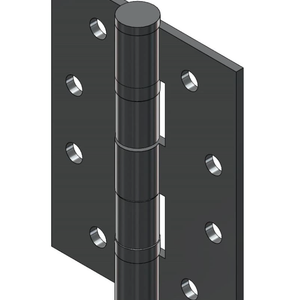
What Defines Industrial Butt Hinges?
Industrial butt hinges are robust, surface-mounted mechanical joints formed by two distinct metal leaves joined by a central pin, designed primarily for maximum load distribution. These components represent the most traditional and structurally straightforward method of articulating a door, relying on sheer material strength to support immense weights.
In the realm of industrial manufacturing, these components are typically stamped, cast, or machined from high-grade materials such as 304 or 316 stainless steel, heavy-gauge carbon steel, or specialized marine-grade alloys. The design is inherently simple, which is exactly where its mechanical advantage lies. Because the leaves are mounted directly to the exterior surfaces of the frame and the door, the load is transferred directly through the heavy-duty pin. This direct transfer makes them exceptionally capable of handling severe radial loads and heavy impacts.
Engineers typically specify these components when designing massive access doors on industrial machinery, heavy-duty workshop cabinets, or large-scale acoustic enclosures. Installation methods vary widely based on the application. While some are designed for heavy-duty rivets or high-tensile structural bolts, many industrial variants are engineered to be permanently welded directly to the enclosure body, creating an unbreakable bond that eliminates the risk of fastener loosening under high-vibration conditions.
How Do Concealed Hinges Function?
Concealed hinges operate via a multi-pivot internal linkage system that remains completely hidden when the door is closed, offering superior security and unbroken exterior surfaces. Instead of relying on a single external pin, these complex mechanisms utilize a series of articulated arms and pivot points mounted entirely on the inside of the enclosure.
From a manufacturing perspective at ForndLock, designing these internal mechanisms requires precise kinematic calculations. The hinge must allow the door to swing outward and clear the frame without binding, often requiring complex U-shaped or multi-axis sweeping motions. Because the entire assembly is housed internally, the mounting plates are secured directly to the interior walls and the inner face of the door panel.
This internal placement fundamentally changes the geometry of the enclosure. It requires engineers to account for the physical space the hardware will consume inside the cabinet, ensuring it does not interfere with internal racking systems, wiring harnesses, or sensitive electronic components. Despite this spatial requirement, the hidden nature of the mechanism provides unparalleled advantages for modern industrial design, particularly where smooth, uninterrupted exterior lines and maximum tamper resistance are mandatory project requirements.
How Do Their Pros Compare?
The primary advantage of butt hinges lies in their unmatched structural simplicity and high load capacity, whereas concealed hinges excel in anti-vandalism security and seamless gasket compression. Understanding these diverging strengths is crucial for aligning your hardware choice with your specific operational requirements and environmental challenges.
When we guide OEM clients through the selection process, we emphasize that neither option is universally superior. Instead, each excels in entirely different operational theaters. The evaluation process demands a careful balancing act between how much weight the door carries, how much abuse the exterior will take, and how tightly the door must seal against environmental hazards. By breaking down the specific advantages of each type, procurement personnel and design engineers can better match the hardware to the exact demands of their final product.
Why Choose Traditional Butt Hinges?
Engineers specify butt hinges when the project demands extreme durability, high radial load resistance, and straightforward maintenance in harsh industrial environments. The sheer mass of heavy-gauge metal leaves and thick pins provides a level of structural integrity that complex internal linkages struggle to match.
For applications involving massive steel doors, such as heavy machinery access panels or blast-resistant enclosures, the external mounting allows for a wider distribution of the load across the frame. Furthermore, their simple design means they are highly resistant to debris. In environments filled with metal shavings, sawdust, or heavy particulate matter, there are no complex internal gears or linkages to get jammed. Maintenance is equally straightforward, often requiring nothing more than a routine application of industrial lubricant to the external pin.
Why Opt for Concealed Hinges?
Concealed hinges are the preferred choice when preventing unauthorized tampering, maintaining strict IP-rated environmental seals, and ensuring a flush exterior are critical project requirements. By moving the articulation mechanism inside the locked cabinet, you completely eliminate the most common point of attack for vandals and thieves.
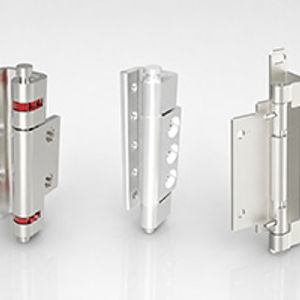
In addition to security, these internal mechanisms often provide superior kinematics for gasket compression. Many advanced designs are engineered to pull the door inward slightly as it closes, applying even, consistent pressure against the neoprene or silicone weather stripping. This precise compression is vital for passing stringent IP65, IP66, or IP67 waterproof and dustproof testing. Furthermore, the absence of external hardware prevents the accumulation of dirt, ice, or corrosive chemicals on the outside of the cabinet, making them ideal for sterile cleanrooms, food processing facilities, and harsh outdoor environments.
What Are The Main Cons?
Butt hinges expose their pins to potential tampering and environmental corrosion, while concealed hinges require complex internal clearances and generally support lower weight limits. No hardware solution is without its compromises, and identifying these limitations early in the design phase prevents costly redesigns and field failures.
As a manufacturer, we transparently discuss these drawbacks with our clients to ensure realistic expectations. A thorough analysis of the concealed hinges vs butt hinges for cabinet doors pros cons requires acknowledging where these components fail. Whether it is a physical space limitation inside a crowded electrical box or a vulnerability to angle grinders on a remote street corner, understanding the weaknesses of your hardware is just as important as leveraging its strengths.
Where Do Butt Hinges Fail?
These traditional components often fall short in high-security applications because their externally visible pins and leaves can be driven out, drilled, or cut by determined vandals. Even when equipped with non-removable pins or welded construction, the mere presence of external hardware provides a physical leverage point for forced entry.
Beyond security vulnerabilities, external placement subjects the entire mechanism to the full brunt of the local environment. In coastal installations or chemical processing plants, even high-grade stainless steel can eventually succumb to galvanic corrosion or pitting if corrosive agents are allowed to settle on the exposed joints. Additionally, in tight factory aisles or automated logistics centers, protruding external hardware can create snag hazards for passing equipment, personnel, or automated guided vehicles, potentially causing accidents or ripping the door from its frame.
What Limits Concealed Hinge Use?
The internal linkage mechanism of hidden hinges consumes valuable enclosure volume and typically cannot withstand the extreme shear forces handled by surface-mounted alternatives. Because the load is transferred through multiple pivot points and extended arms, the mechanical leverage works against the hardware, significantly reducing its maximum weight rating.
If an industrial door is excessively heavy or subjected to downward shock loads, internal linkages can bend, causing the door to sag and fail to latch properly. Furthermore, the installation process requires significantly tighter manufacturing tolerances. If the mounting holes are even slightly misaligned, the complex sweeping motion of the door will bind, preventing it from closing. This necessitates precision laser cutting and CNC bending of the enclosure panels, which can increase the overall manufacturing cost for OEM clients compared to the forgiving nature of external surface mounting.
When Should You Select Which?
Your selection must be dictated by the specific interplay between door weight, security threat levels, environmental exposure, and the internal spatial geometry of your enclosure project. Making the final call requires synthesizing all the mechanical properties and limitations we have discussed into a practical application matrix.
For instance, procurement teams often ask us about when to use butt hinges instead of concealed hinges furniture applications, specifically referring to heavy-duty stainless steel laboratory workstations. In these cleanroom environments, the priority is often easy wipe-down surfaces and preventing bacterial accumulation, making hidden internal mechanisms the clear winner despite the lower load requirements of the cabinet doors.
Conversely, analyzing the structural integrity requirements is the best way to determine when to use butt hinges instead of concealed hinges furniture assemblies designed for factory floor tool storage. When a metal workshop cabinet must hold hundreds of pounds of steel tooling and endure daily impacts from forklifts, the external surface-mounted option provides the necessary brute strength that internal linkages simply cannot deliver. We provide detailed engineering matrices to help you decide when to use butt hinges instead of concealed hinges furniture and heavy industrial enclosure projects alike, ensuring your exact operational parameters are met.
How Did We Solve It?
By analyzing a recent telecommunications infrastructure project in Northern Europe, we demonstrated how upgrading from standard external hardware to custom internal linkages prevented severe weather ingress and vandalism. This real-world application highlights the critical importance of matching hardware capabilities to extreme environmental demands.
Our client, a major OEM building outdoor 5G relay enclosures, was experiencing unacceptable failure rates in coastal regions. Their original design utilized standard 304 stainless steel external hinges. However, the combination of aggressive freezing rain, high-velocity saltwater spray, and isolated locations led to two major issues. First, ice accumulation on the external joints frequently froze the doors shut, preventing emergency maintenance access. Second, vandals were using heavy tools to sheer off the exposed hardware, gaining access to expensive copper wiring and sensitive transmission equipment.
The engineering team at ForndLock was brought in to redesign the access articulation. We engineered a heavy-duty concealed hinge system manufactured from 316L marine-grade stainless steel. To handle the unusually heavy dual-layer insulated doors, we utilized a reinforced multi-axis linkage that distributed the weight across a wider internal mounting plate. More importantly, we calculated a specific geometric sweep that allowed the door to compress a thick, continuous polyurethane poured-in-place gasket perfectly upon closing. The result was an enclosure that easily passed strict IP66 testing, eliminated exterior ice jamming, and reduced vandalism access incidents to zero across their entire regional deployment.
How Can We Support You?
As a dedicated manufacturer, ForndLock provides comprehensive engineering support, rapid prototyping, and scalable production to ensure your exact hardware requirements are met flawlessly. We do not just supply standard parts; we partner with your engineering and procurement teams to solve complex mechanical articulation and sealing challenges.
Our manufacturing facilities are equipped to handle everything from standard high-volume production to highly specialized OEM and ODM custom designs. We understand that industrial clients require rigorous validation before committing to a hardware ecosystem. That is why we offer extensive internal testing capabilities, including salt spray corrosion testing, high-cycle fatigue testing, and tensile strength load verifications, ensuring every batch meets strict industrial standards.
Whether you are designing a new line of waterproof electrical enclosures, upgrading heavy machinery access panels, or optimizing your current production line for better assembly efficiency, our engineering team is ready to assist with material selection, kinematic modeling, and tolerance analysis. We invite engineers, procurement officers, and project managers to leverage our decades of manufacturing experience for your next critical design phase. To request physical samples for your evaluation, submit CAD drawings for a custom engineering review, or discuss your upcoming bulk production requirements, please send your project details to: [email protected].