
Comprehensive Guide to Cam Latch Applications in Industrial Enclosure Panel Security
Securing Industrial Enclosures With Advanced Hardware
At ForndLock, our decades of manufacturing experience have shown that keeping industrial panels in good working order depends heavily on well-engineered hardware. The main focus of this technical guide is cam latch applications in industrial enclosure panel security. When heavy machinery runs in tough environments, basic off-the-shelf fasteners simply do not hold up. Engineers are constantly fighting against failing environmental seals and fasteners that loosen from vibration. This article gives a thorough look at how advanced locking mechanisms protect sensitive electronics, covering strict IP ratings, resistance to moving loads, how cam latches are used in medical equipment cabinet design, and real-world project examples. Our goal is to give design engineers and purchasing teams the exact technical knowledge they need to choose the right parts for their next generation of equipment. Whether you are working with outdoor telecom cabinets or clean hospital settings, understanding how these key components work can prevent serious system failures. The reliability of your entire system often comes down to whether a single locking mechanism holds. As an established manufacturer, we know that hardware selection is never something to think about at the last minute. We will walk you through the specific engineering requirements that lead to successful results, making sure your enclosures stay fully secured even under the most demanding conditions possible.
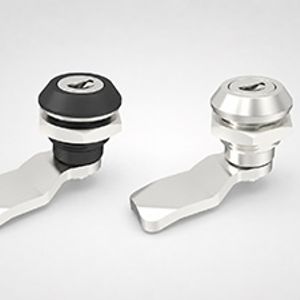
Key Standards for Industrial Panels
Understanding cam latch applications in industrial enclosure panel security requires a close look at the extreme technical demands placed on these components. Heavy industrial settings create environments where standard commercial latches break down quickly due to chemical exposure, dust and particle buildup, and constant physical stress. Reaching high IP ratings, specifically IP65 and IP67, depends entirely on the mechanical compression that the latch creates against the enclosure gasket.
To maintain strong environmental protection, several important requirements must be met:
· Dust Protection: The latch must provide enough consistent compression to stop tiny particles from getting past the gasket barrier when pressure differences occur.
· Moisture Resistance: Under IP65 standards, the enclosure must be able to handle low-pressure water jets from any direction. This requires a latching mechanism that keeps the gasket evenly compressed without bending the door panel. When moisture gets into a control panel, the electrical shorts that follow can cost thousands of dollars in downtime and replacement parts.
· Vibration Management: Heavy machinery produces continuous low-frequency vibrations, typically between 10Hz and 55Hz. These moving loads actively work to unscrew standard threaded fasteners and loosen ordinary locking cams.
Our engineering analysis shows that moving loads have a significant effect on latch torque over long periods of time. When a panel door faces continuous vibration, the resonant frequency can cause tiny movements between the cam and the frame. Over time, this friction reduces the original clamping force, which leads to a loss of gasket compression. To fight this, industrial-grade solutions use specialized detent mechanisms and high-friction O-rings that resist rotational loosening even under severe physical stress. By including these advanced features, engineers can be confident that the enclosure stays sealed. On top of that, strict testing requirements mean these components must survive thousands of operating cycles without a significant drop in clamping force. For purchasing teams sourcing hardware for heavy-duty uses, choosing latches specifically engineered for dynamic load resistance is the only way to guarantee long-term reliability and compliance with tough industrial safety standards.
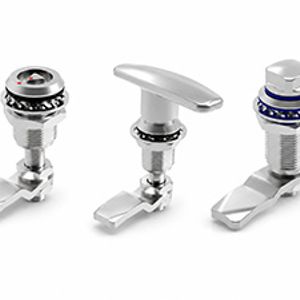
Latches in Medical Cabinet Design
While heavy industry calls for tough and durable hardware, the healthcare sector presents a completely different set of engineering challenges. Exploring how cam latches are used in medical equipment cabinet design reveals a strict focus on hygiene, resistance to chemicals, and non-magnetic properties. In sterile surgical suites and diagnostic laboratories, the main concern is not necessarily physical impact, but rather the buildup of bacteria and chemical corrosion from strong cleaning agents.
When analyzing how cam latches are used in medical equipment cabinet design, choosing the right material becomes the most important factor. For enclosures placed in MRI rooms, hardware must be completely non-magnetic. We regularly specify 316L stainless steel for these environments because it offers excellent corrosion resistance while staying non-reactive, meaning it will not interfere with sensitive imaging equipment. Beyond that, the physical shape of the hardware must support thorough sanitation routines. Smooth designs with as few crevices as possible stop pathogens from building up, ensuring compliance with strict healthcare facility standards.
Ease of access is another key consideration. Healthcare workers often use these cabinets during high-pressure, critical moments when struggling with a difficult mechanism is simply not acceptable. The opening and closing action must be smooth, easy to understand, and dependable, allowing nurses and technicians quick access to life-saving equipment or secure medication storage. Additionally, the physical feedback provided by a well-engineered locking mechanism gives healthcare workers confidence that the cabinet is properly closed, preventing accidental spills or exposure to sensitive materials.
To highlight these different engineering paths, consider the following comparison between industrial and medical material requirements:
· Industrial Environments: Focus on high tensile strength, UV resistance, and tolerance for heavy vibration. Zinc alloy and tough polyamides are common choices, with the emphasis on surviving impacts and delivering raw clamping force.
· Medical Environments: Focus on compatibility with chemical washdowns, non-magnetic properties, and smooth surface finishes. Electropolished 316L stainless steel and antimicrobial plastics are essential for preventing cross-contamination.
By understanding these detailed requirements, OEM clients can design medical cabinets that not only secure valuable equipment but also actively support the overall cleanliness and safety of the healthcare environment. The precise engineering behind these components ensures they work perfectly in environments where failure is simply not an option.
Case Study: European Automation Project
To truly understand the real-world impact of cam latch applications in industrial enclosure panel security, we can look at a recent project involving a leading industrial automation client based in Germany. This case study shows how targeted engineering can solve critical operational failures.
Client Background
The client is a major manufacturer of automated robotic assembly lines for the automotive industry. Their control panels house highly sensitive programmable logic controllers and motor drives, which manage complex manufacturing sequences on the factory floor.
Technical Challenge
The automated machinery produced continuous high-frequency vibration during operation. Over a short period, this kinetic energy was causing the traditional enclosure doors to loosen. The standard fasteners could not hold their torque under moving loads, which led to tiny gaps forming between the door and the frame. This failure caused serious dust ingress and completely undermined the IP65 ratings of the cabinets. The particle contamination was putting the sensitive internal electronics at risk, threatening catastrophic line shutdowns and major financial losses.
ForndLock Solution
Our engineering team stepped in to assess the failure modes. Drawing on our extensive manufacturing experience, we determined that standard rotational latches were not suitable for this environment. We replaced the failing hardware with our specialized compression cam latches, specifically designed for dynamic loads. These advanced mechanisms include an integrated compression stroke that pulls the door tightly against the gasket after the initial rotation, locking the cam in place with a high-friction detent system that physically cannot loosen under vibration.
Final Outcome
After installing our engineered solution, the client put the new panels through accelerated life testing. The result was zero loosening incidents over millions of continuous operation cycles. Full environmental sealing was restored, the IP65 rating was firmly maintained, and the internal electronics were completely protected from factory dust. The German client reported a significant drop in maintenance call-outs and a measurable improvement in overall equipment effectiveness. This project highlights the absolute importance of matching the right locking mechanism to the specific environmental challenges of the application.
Expert Selection and Installation Guidelines
While many general guides might simply list the top applications of cam latches, serious engineers know that successful implementation depends entirely on precise dimensional tolerances and material selection. Choosing the correct hardware requires a careful, step-by-step approach to ensure long-term performance and smooth assembly line integration.
The most important calculation in the specification process is determining the exact grip range. This is the total distance from the outer surface of the door panel to the inner surface of the frame where the cam engages, including the compressed thickness of the gasket. Selecting the right cam offset ensures that the mechanism applies exactly the right amount of pressure to achieve a watertight seal without over-compressing and damaging the gasket material.
To avoid installation errors on the production line, it is essential to standardize panel preparation. Engineers must make sure that cutout dimensions are strictly followed, using keyed holes to stop the latch body from rotating during actuation. Properly training assembly line workers on these standardized installation steps further reduces manufacturing defects and ensures consistent quality control across all production batches.
Here is a standardized approach to material selection for different environments:
Material Type | Primary Characteristics | Ideal Environmental Applications |
Zinc Alloy | High structural strength, cost-effective, easily plated | Indoor industrial panels, standard electrical enclosures |
Polyamide (Nylon) | Lightweight, corrosion-resistant, non-conductive | Outdoor telecom boxes, corrosive chemical environments |
Stainless Steel (304/316) | Maximum corrosion resistance, high tensile strength, hygienic | Marine environments, food processing, medical cabinets |
Following proper installation steps guarantees the best possible performance:
1. Measure the total panel thickness and frame distance to calculate the required grip.
2. Punch or laser-cut the standardized mounting hole, making sure the anti-rotation keyway is correctly aligned.
3. Insert the latch body through the panel and secure it with the mounting nut tightened to the specified torque.
4. Attach the selected cam, making sure the offset faces the correct direction for optimal gasket compression.
By strictly following these guidelines, purchasing teams and design engineers can eliminate assembly issues and guarantee reliable performance in the field.
Partner With ForndLock for Solutions
Throughout this analysis of cam latch applications in industrial enclosure panel security, we have shown the critical role these engineered components play in protecting vital infrastructure. From standing up to heavy dynamic vibrations on factory automation lines to exploring how cam latches are used in medical equipment cabinet design to maintain sterile environments, the right hardware is the foundation of equipment success. Do not let low-quality hardware put the integrity of your sophisticated equipment at risk.
At ForndLock, we remain deeply committed to manufacturing excellence and custom engineering. We understand that standard catalogs do not always solve unique structural challenges, which is why our team is dedicated to developing tailored solutions that meet your exact specifications. Whether you are an OEM client designing the next generation of medical devices or a purchasing officer sourcing reliable fasteners for rugged outdoor telecom cabinets, our expertise ensures you receive components that perform flawlessly under pressure.
We invite engineers and purchasing professionals to work with our technical team. You can send project requirements, drawings, sample requests, or discuss custom needs by emailing [email protected]. Please include any relevant CAD drawings or custom specifications to help us evaluate your application quickly. To explore our full range of secure hardware, visit our industrial hardware solutions page to find the exact mechanism needed for your next demanding project.